
Pump the tank before it pumps up your yard.
Regular septic pumping removes the solids that build up in the tank, protecting the drain field from clogging and the house from backups.
- Typical visit: One to two hours
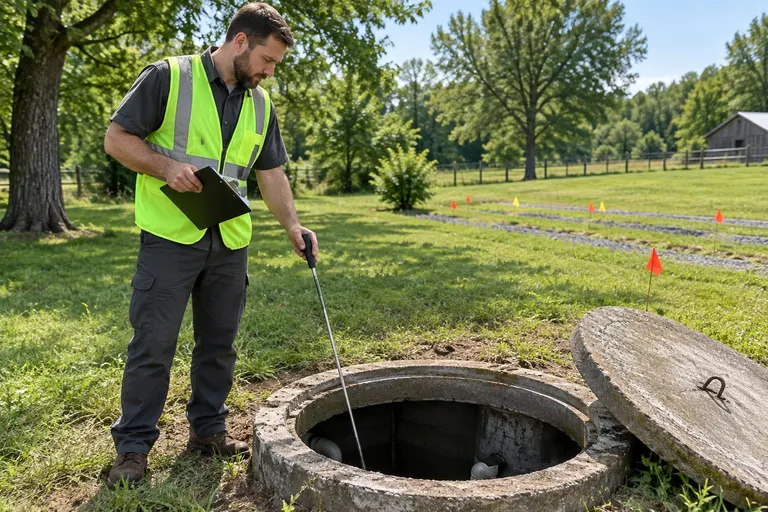
- Includes: Pumping, baffle check, sludge and scum measurement
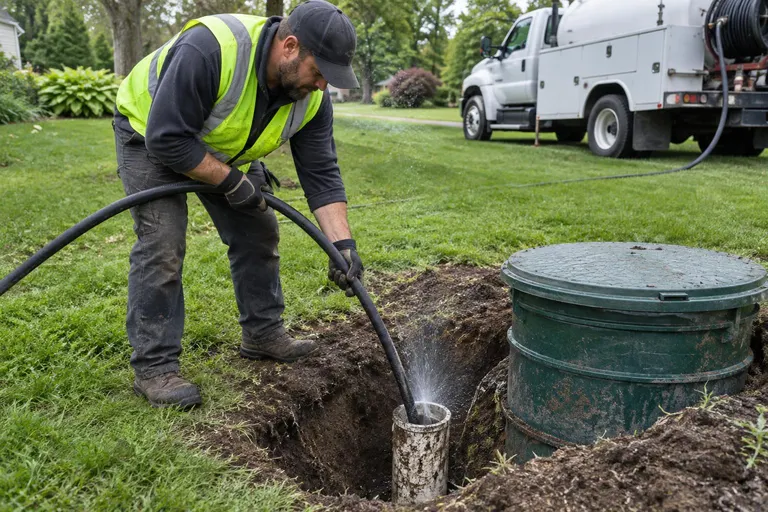
- Access: Digging to the lid when buried
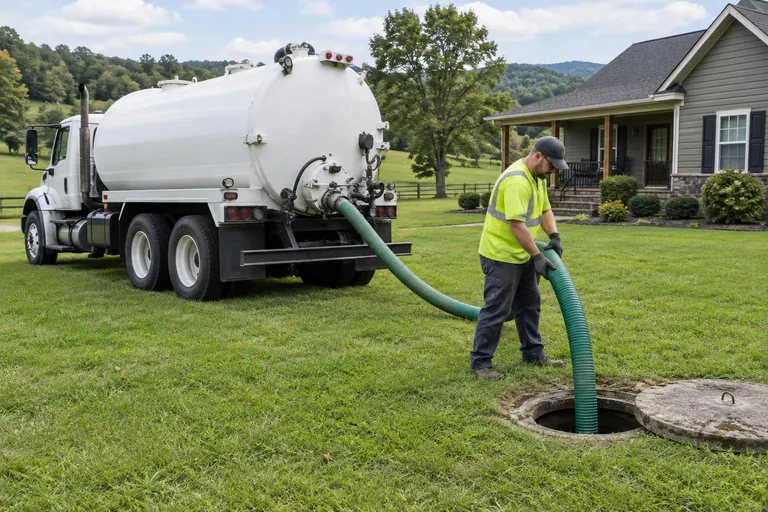
What it is, and why it matters.
A septic tank separates solids from wastewater. Heavy solids settle as sludge, grease and light solids float as scum and the liquid in between flows out to the drain field. When sludge and scum get too deep, solids escape to the field, clog the soil and eventually cause backups and expensive repairs.
We pump the tank through the access lid, measure the sludge and scum layers, check the inlet and outlet baffles and look at the condition of the tank. For homes on septic in the Nashville area and across Tennessee, we recommend a pumping schedule based on tank size and household use. We also tell you what to avoid, such as flushing wipes or pouring grease down the drain.
Four things done right.
Full pump-out
We empty the tank, not just the top layer.
Baffles inspected
Cracked or missing baffles are a common hidden problem.
Schedule suggested
A plan matched to tank size and household use.
Records kept
A written note for your file or a real estate sale.
From first call to septic tank pumping.
- 01
Find the tank
Locate the lids and expose them if buried.
- 02
Pump it out
Remove liquid, sludge and scum.
- 03
Inspect
Check baffles, tank walls and the outlet.
- 04
Advise
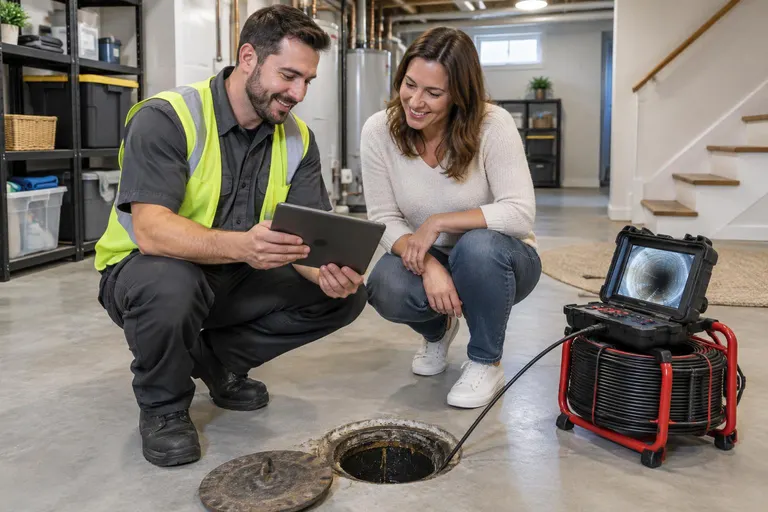
Explain the condition and the next pump date.
Septic Tank Pumping across Tennessee.
We do this work in 58 cities, from Nashville and Franklin to Memphis, Knoxville, Chattanooga and Johnson City.
Septic Tank Pumping: common questions
How often should a septic tank be pumped?
Many households pump every three to five years. A larger household, a small tank or a garbage disposal can mean more often. The sludge measurement helps set the right schedule.
What are signs that a septic tank needs pumping?
Slow drains, gurgling, sewage smells, wet areas over the field and backups are common signs. Waiting until you see them usually costs more than pumping on schedule.
How do I get a price for septic tank pumping?
Fill in the form or call or text 615-209-7643. We confirm what is involved and send a written price, and most properties get a free estimate visit.
Ready to talk about septic tank pumping?
A short visit, a camera when it helps and a written price. A real person calls back, usually the same day.